Penske Logistics is battling a federal appeals court decision that holds it liable for a fatal accident, as plaintiffs argue for established trucking industry regulations.
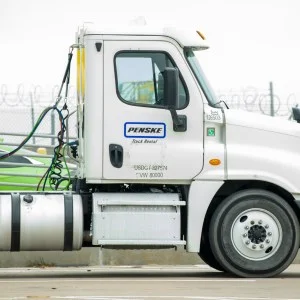
The recent developments in the Fifth Circuit concerning liability within the trucking industry have significant implications for both brokers and carriers, particularly for companies in the Penske network. The case in question involves the tragic death of Lyndon Dean Meyer, who was killed on December 26, 2018, after a truck associated with the Penske company collided with his vehicle on Highway 202 in Bee County, Texas. This incident has sparked a legal battle focusing on control and liability issues that could reshape expectations within the automotive logistics sector.
Penske Logistics previously obtained a favorable ruling in the Southern District of Texas, where it was absolved of liability. However, the Fifth Circuit has since overturned that decision, prompting Penske to request an en banc hearing to reconsider the appellate court’s ruling. The stakes are high as this case may set a precedent for how freight companies manage liability in multi-tiered shipping arrangements.
Background of the Case
The incident leading to this legal confrontation involved a series of brokering steps initiated by Penske Logistics. They were contracted by car seat manufacturer Adient to transport their products, which were subsequently handed over to Penske Transportation Management (PTM), a brokerage division within the Penske umbrella. PTM then brokered the load to Liberty Lane, a carrier that further contracted it to OK Trans, whose driver ultimately crashed into Meyer’s vehicle.
Penske has claimed it was unaware of the double brokering involved in this freight arrangement, which they argue should absolve them of responsibility for the accident. While the Penske companies acknowledge this arrangement, they assert that the key issue at hand is whether they had any control over the actions of the driver from OK Trans. The Fifth Circuit's ruling, however, has deemed that Penske Logistics was liable for the actions of this driver, despite their claims of a lack of authority or knowledge regarding operations downstream.
Legal Arguments and Interpretations
The debate centers on the concept of control in transport logistics. Penske Logistics and PTM posited in their request for an en banc hearing that no legal framework exists that can impose liability when there is no direct arrangement or communication between a motor carrier and the vehicle's operator. They highlighted that the lower court had established that no precedent existed for statutory-employer liability being assigned without an explicit relationship between the parties involved.
Contrarily, the plaintiffs argue that Penske did indeed have an indirect arrangement with the truck driver since it operated through its brokerage subsidiary. They contend that the relevant statutes and regulations regarding vicarious liability apply equally, regardless of the directness of the relationship. The plaintiffs referenced 49 U.S.C. § 14102, which establishes the carrier's duty to maintain oversight when utilizing vehicles not owned by it. They argue that Penske failed to uphold its statutory duties by not ensuring compliance with regulations intended to prevent such liabilities.
Industry Implications and Reactions
This case is poised to resonate across the trucking and logistics sectors, as industry professionals are keenly aware of the potential shift in how companies may approach liability in similar situations. Legal experts in trucking view the appellate decision as creating concerning precedents, particularly around the interpretation of employer liability laws regarding independent contractors. There’s trepidation that this could open the floodgates for litigation against brokerages and carriers in cases where they might not have direct control over the actions of subcontracted drivers.
The pushback from the plaintiffs' side indicates a robust challenge to Penske’s interpretations, reiterating that safeguarding measures must go beyond mere contractual safeguards. The plaintiffs assert that the very intent behind statutory regulations is to curb abuses and gaps in accountability, indicating a need for deeper regulation adherence from large freight operators like Penske.
Support for Penske
Penske's call for an en banc hearing has garnered support from various industry stakeholders. Amicus briefs were filed by notable entities, including the American Trucking Associations and the Truckload Carriers Association, both emphasizing the adverse effects of the appellate ruling on broader transport operations. Their arguments underscore the importance of clarity in liability frameworks to protect against disproportionate burdens from tragic incidents.
As the Fifth Circuit deliberates on the request for an en banc hearing, the trucking industry is closely monitoring the situation, preparing for outcomes that could reshape liability norms. The ramifications of this case are indicative of a broader conversation around regulation, oversight, and safety in the logistics sector. As this pivotal case unfolds, the dynamics of employer-employee relationships in transportation may be redefined for years to come.
More articles by John Kingston
FMCSA’s Elison: ‘weeks’ away from fixing Motus user experience
Wall Street analysts positive on C.H. Robinson deal; S&P more cautious
FMCSA split sleeper berth pilot program moves closer to launch