Ameer Nasir, 25, was sentenced to two years in prison for orchestrating a fraud scheme involving 23 fake trucking accounts, causing significant losses to Amazon.
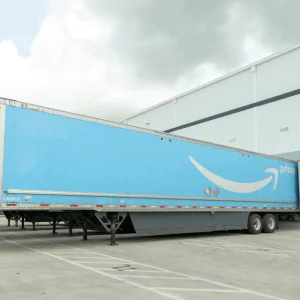
A Connecticut man, Ameer Nasir, has been sentenced to two years in federal prison after being found guilty of defrauding Amazon Logistics through an elaborate scheme involving 23 fictitious trucking companies. This fraudulent operation led to losses exceeding $3.5 million for the e-commerce giant. The sentencing took place in Bridgeport, Connecticut before U.S. District Judge Kari A. Dooley.

Nasir, 25, a resident of Trumbull, Connecticut, was also ordered to pay restitution amounting to $3,547,090.93 and will serve three years of supervised release following his prison term. He is slated to surrender to federal custody on November 12.
This fraudulent scheme was executed between December 2019 and February 2021, raising critical questions regarding identity verification protocols within the transport and logistics sector. Nasir registered or organized the registration of multiple trucking businesses with Amazon, leveraging their logistics platform to simulate over 1,000 trailer movements that were never actually carried out. Each of these nonexistent assignments was reportedly valued at around $3,500, cumulatively resulting in significant financial damage to Amazon.
Fraudulent Operations through Amazon Relay
Amazon Logistics connects with interstate motor carriers via a system called Amazon Relay, which facilitates assignments for moving trailers—both loaded and empty. Nasir was able to access this system by creating multiple business accounts, including one under his own company name, Pak Express Transport LLC, effectively exploiting Amazon’s logistics framework.
In addition to these registered businesses, Nasir also utilized identifying information from legitimate trucking or transportation firms to create additional fraudulent accounts. The specifics of how he obtained this identifying information remain unclear, as prosecutors did not disclose the details concerning the misuse of names, addresses, and U.S. Department of Transportation numbers linked to other companies.
Exploitation of Monitoring Technologies
During the investigation, federal prosecutors revealed that Nasir managed to bypass Amazon Relay's security measures, including GPS geofencing, which is designed to track the location of trailers and devices. By misusing a manual override feature within the Relay system, he could check trailers in and out without any actual movement taking place.
An illustrative example from the indictment details a fraudulent assignment dated May 16, 2020, in which Pak Express purportedly moved a trailer from Kent, Washington, to Lakeland, Florida. Amazon had compensated $4,566.41 for this assignment, which the prosecution proved never took place. Over the course of the fraud, Nasir represented more than 1,000 such nonexistent movements as legitimate transactions.
Legal Proceedings and Industry Implications
Nasir's fraudulent activities culminated in a federal indictment where he faced 13 counts of wire fraud in May 2025. The investigation, led by the FBI with assistance from Amazon, resulted in his arrest on May 8, following which he pleaded guilty to one count of wire fraud in March 2026. His bond was set at $300,000, which he managed to maintain until sentencing.
The maximum penalty for wire fraud can reach up to 20 years in prison, demonstrating the severity with which the legal system treats such offenses. While the initial sentencing date was set for May 29, the court proceedings eventually took place in October 2026, leading to the imposition of the two-year prison term.
Lessons and Future Considerations
The conclusion of this fraud case raises pertinent questions about the adequacy of safeguards within logistics platforms like Amazon Relay. Following these events, Amazon has reportedly enhanced its fraud controls, implementing more robust identity verification strategies to ensure the integrity of its trucking operations. However, the effectiveness of these measures in preventing similar schemes today remains to be seen.
This case serves as a reminder of how a single breached identity can grant access to operations that can scale beyond initial transactional limits. With over 1,000 fraudulent assignments executed, Nasir’s actions highlight the urgent need for consistent verification processes throughout the logistics industry.
As the landscape evolves, continuous vigilance will be necessary to adapt to potential fraud risks that threaten logistics and transportation networks. Emphasis on repeatable verification procedures could help expose inconsistencies and fraudulent activity before transactions occur.


