North Carolina State University research reveals that composite metal foam can improve vehicle safety in frontal collisions, potentially reducing injuries by up to 48% at high speeds.

Researchers at North Carolina State University have made significant strides in automotive safety with their findings on composite metal foam (CMF). Their study suggests that incorporating CMF into vehicle front rails could improve injury prevention limits during frontal collisions by as much as 48% at higher impact speeds.

The research, detailed in the paper titled “Enhancing Safety and Crashworthiness of Vehicles Using Composite Metal Foam,” utilizes advanced computational models to simulate how these materials behave in high-velocity impacts. By integrating CMF into front rail designs, vehicles can absorb substantially more energy upon collision, theoretically allowing them to withstand impacts at higher speeds.
Understanding Composite Metal Foam
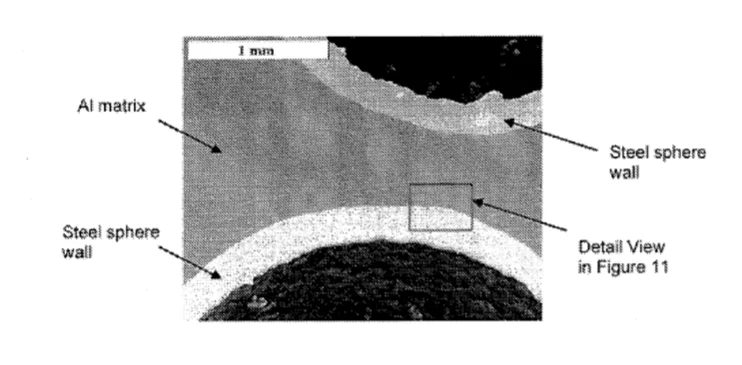
Composite metal foam, as defined in the research, consists of hollow metallic spheres embedded in a matrix of metals like steel or aluminum. This unique structure not only provides lightweight properties but also excels in energy absorption. Applications for CMF range from military vehicle armor to aerospace components, highlighting its versatility.

A cross-sectional view of a permanent casting mold useful in one embodiment of the invention, according to patent no. 9,208,912.
During a crash, the vehicle's bumper dissipates impact energy to the front rails, which are designed to deform in a manner that minimizes energy transfer to occupants, thereby reducing the risk of severe injuries. This is crucial in ensuring that deceleration does not occur too abruptly, which can lead to serious head and other bodily injuries.
Comparative Analysis of Front Rail Designs
Two prevalent front rail designs in vehicles today are the rectangular cross-section and the double-octagonal cross-section. The rectangular cross-section comprises hollow steel rectangles, while double-octagonal designs consist of two stacked aluminum octagons. The study compares these conventional designs against an innovative version using a core of CMF.
Data from the study shows that CMF front rails outperform both types of conventional rails significantly. For instance, vehicles with CMF could travel about 34% faster before hitting critical crash severity levels compared to double-octagon rails, and an impressive 48% faster compared to rectangular rails. The impact on head injury limits is similarly noteworthy, with improvements of roughly 40% and 32%, respectively.
“In simple terms, the CMF front rails allowed the vehicle to withstand much higher impact speeds before reaching critical safety limits,” explained Afsaneh Rabiei, one of the study’s lead authors and a mechanical and aerospace engineering professor at NC State. This establishes that as impact speeds increase, CMF materials maintain their advantage over conventional designs.
Performance Metrics of Composite Metal Foam
The study employed extensive experimental data to ascertain how the CMF performed under various crash scenarios. For a typical 55 mph collision, the CMF design resulted in a reduction of maximum deceleration by about 38% and overall crash severity by 45% compared to double-octagonal designs. In contrast, rectangular rails showed a much greater reduction, with maximum deceleration dropped by 84%, severity by 94%, and the Head Injury Criterion (HIC)—a crucial metric for assessing potential head injuries—reduced by around 83%.
Rabiei noted that CMFs not only benefit safety but do so without compromising fuel efficiency, as CMF front rails can be designed to match the length and weight of traditional rails. This could open avenues for decreased vehicle weight without sacrificing safety, ultimately enhancing fuel economy.

A chart of the stress-strain curves of composite metal foams under monotonic compression for various embodiments, according to patent no. 9,208,912.
Future Applications and Industry Impact
Given CMF's inherent resistance to heat and fire, the researchers highlighted its potential application within electric vehicles (EVs) as well. Specifically, CMF could enhance safety structures designed to protect high-voltage battery packs during crashes, which is increasingly critical as EV adoption rises.
NC State is eager to collaborate with the automotive industry to test these new CMF-based designs in existing front rail configurations or even create novel designs altogether. Rabiei emphasized, “We are open to working with the automobile industry to conduct testing of rails that make use of CMF.” This cooperation could help in rolling out safer, more efficient vehicles that adhere to modern safety standards.
As manufacturers continue to prioritize safety in vehicle design, the integration of advanced materials like CMF could reshape the automotive landscape, offering a new frontier in collision safety and vehicle performance.
Images credited to NC State and public patent documentation serve to illustrate the research findings and potential applications.


